


Justice Kaye Hearn Is VIP Guest Speaker at VOICE Monthly Luncheon
Kaye Hearn, retired South Carolina Supreme Court judge, was the guest speaker at the September 21 VOICE monthly luncheon. More than seventy women attended the event held at the North Myrtle Beach Surf and Golf Club.
Hearn is a distinguished South Carolina jurist whose career spanned more than four decades and included service on the Family Court, the South Carolina Court of Appeals, and twelve years on South Carolina Supreme Court. She is the second woman to sit on South Carolina’s Supreme Court.
She spoke of being a young law student in the early ‘70s. Many questioned her choice: “Why are you taking a place in law school a man should have” and “Maybe you’ll marry a lawyer.” In those days women made 59 cents to men’s every $1. She worked hard for the Equal Rights Amendment, which failed to be ratified in South Carolina along with twelve other states.
She believes that woman have come far, now earning about 86 cents for every $1 earned by men for full-time work in South Carolina. But, the citizens of this state have more work to do. In “Best States To Live In” reports, South Carolina ranks 45 out of 50 states for “Women’s Economic and Social Well Being.”
As elections approach, we should be aware that South Carolina ranks 49th of the 50 states for women holding legislative seats. Nationwide, women make up one-third of state legislators compared to South Carolina’s 14 percent.
She ended her presentation with a rousing toast: To Strong Women! May we know them, be them, raise them!
Guest speaker at VOICE’s October 19 luncheon is Dr. Jermaine Johnson, candidate for South Carolina governor and currently serving in the South Carolina House of Representatives.
July Luncheon Address: Rev. Cheryl Moore Adamson
For those who couldn't join us at our July luncheon, we're sharing the full text of Reverend Cheryl Moore Adamson's powerful address, "Sankofa and the Fierce Urgency of Now." Reverend Adamson wove together three generations of her family's history — her 97-year-old mother's life under Jim Crow, her own journey integrating Conway High School, and her daughter's generation — into a reflection on how far we've come and the work still ahead. We're grateful she shared her story with us, and we wanted our members who missed it to be able to read her words in full.
TO GOD BE THE GLORY!!!
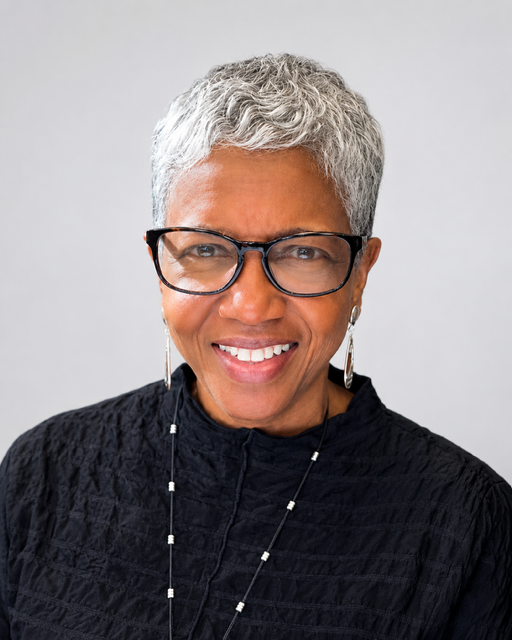
Reverend Cheryl Moore Adamson, MDiv
Monday, July 20, 2026
VOICEnmb.org/Surf Beach Club NMB
"Sankofa and the Fierce Urgency of Now”
Greetings: Good morning, Everyone! I want to thank each and every one of you for being here this morning share in another exciting time of sisterhood and fellowship. We need to create another word for that. (Maybe Sistership?) I especially want to thank Donna Dowell Saunders and the leadership of VOICE for inviting me here, especially following the likes of our sheroes, Ms. Sylvia Wright, our next State Superintendent of Education and Dr. Annie Andrews, our next Senator from South Carolina. I want to thank my beautiful daughter Mary Louise Adamson Adeogun for that heartfelt introduction. By the grace of God, I am sandwiched today between two generations. My daughter is 47. I’m 74 and my beautiful mother Mary Louise Ervin Moore is with us today and she is 97 years old. I also have a bonus daughter with me today, my niece Frances Adamson along with my friends from various parts of my life, including members of our church. Would you all stand? Thank you.
In the vernacular of my context, were I to put a tag on these reflections today, the title would be “Sankofa and the Fierce Urgency of Now.” “Sankofa and the Fierce Urgency of Now.”
SANKOFA AND THE FIERCE URGENCY OF NOW
My mother, a retired educator with the Horry County School District, was born in 1929. She has lived her life exclusively in South Carolina - born, as she would tell you, just two steps removed from slavery. That means she came into this world when the physical, spiritual, and psychological wounds of bondage still lived on in the bodies of people she knew and loved.
She grew up under Jim Crow - where the law itself told her where she could sit, where she could drink, where she could dream. She heard whispers of young men being spirited away in the dead of night to avoid murderous lynch mobs. She rummaged through the trash cans of the rich young women of Coker College to retrieve their discarded books. She stood in spirit with the women and men who walked through Birmingham, who crossed that bridge at Selma, bleeding for the right to simply be counted as citizens.
She was a grown woman when the Civil Rights Act of 1964 finally said, on paper, that she was equal. She celebrated when the Voting Rights Act of 1965 tried to make that promise real at the ballot box. And in 1966, she became the first African American teacher in Horry County to teach in a predominately white school.
My daughter, at 47, grew up in the generation that was led to believe that the doors were open - and has spent her life learning how heavy they still are to push. And here I stand, between these two women, in 2026 - carrying every march, every prayer, every sacrifice they represent - speaking to you today. Three generations. Nearly 100 years of American history. And we are still here. Still showing up. Still believing that this democracy belongs to all of us.
So in this Sankofa moment, I want to share some stories more specifically from my life. Know that my life is not unique. It is reflected in the faces, the bodies, the memories, and the lives of many of the women who have come to support me today. I tell my story because it is the one I know most intimately - and the one I can speak to with honesty when your questions come.
The Akan people of Ghana teach us the wisdom of Sankofa - that it is never wrong to go back and reclaim what is precious from our past in order to build a stronger future. The Sankofa bird flies forward while its head looks back, carrying its egg - its future - carefully in its mouth. In all of my interactions with young people, I encourage them to embrace the Spirit of Sankofa, so that they, along with their children, may move wisely into the future, building on the experiences and the wisdom of their elders.
So here we go.
I was born in Hartsville, South Carolina in 1952 and grew up in Conway from the age of two. I attended Whittemore Elementary School - what historians call an Equalization School. These schools were built across the South in a calculated effort to preserve segregation after the Supreme Court's Brown v. Board of Education ruling struck down the doctrine of Separate But Equal. The thinking was simple and cynical: build Black children better buildings and the courts will leave us alone.
My life in that school was, in many ways, idyllic. We were surrounded by extraordinarily intelligent women - loving, compassionate, and above all, elegant. (there were only two male elementary school teachers at the time, Mr. Mention and Mr. Cunningham.) These were women who, under different circumstances, could have been nurses, dentists, doctors, professors, attorneys - anything they set their minds to. Their circumstances, constrained by law and societal convention, directed their gifts into the classroom - the one door society left open for educated Black women. They poured everything they had into us. Now that we no longer have substantial numbers of Black women teachers in our schools, I understand with even greater clarity what we received - and what my daughter Mary carries forward in her own work with young people as a math and science teacher to middle and high school students.
In 1966, we were offered what was called Freedom of Choice - the option to attend predominantly white schools in our community. I enrolled at Conway High School while my brother Chip went to Conway Junior High. There were five Black students in the class of 1968, three or four in 1969, and then nine of us - one young man and eight young ladies - in the class of 1970. I was alone in every class except for one period, one year for my entire 4 years there.
I was generally well received among my classmates. And yet, I remember a student saying to her friend within my earshot: "If it wasn't for that N, I wouldn't have to study."
Two moments of inequity from those years stay with me. My father, Reverend Covel C. Moore, Sr., taught biology at Whittemore High School. To ensure his students had the equipment they needed, he walked into the district office, climbed a ladder to the attic in front of everyone present, and retrieved microscopes sitting unused - microscopes never made available to him and his students. He took what his children needed and deserved and carried them down himself.
In my sophomore year, Conway High received a brand new, state-of-the-art media center installed in the space that once held our auditorium. A few days after it was finished, I visited Whittemore High School and found our old auditorium seats installed there - seats carved up by students' knives, old chewing gum shellacked over and gleaming, presented to those students as though they had received a gift, something fine.
Two moments of opportunity from those same years also stay with me.
In 1970, I became the first African American student in Conway High School history to serve as commencement speaker. Later that same week, I became the first African American student from Horry County to attend the University of South Carolina in Columbia. And there is one moment of humiliation I still remember. During my first year at Conway High, a teacher sent me with a message to deliver to another classroom. I walked in without knocking - I simply did not know the culture of that school. The substitute teacher, an older white man, made me stand at his desk for what felt like hours. He ignored me. Then he told me, in front of the class, that I was wrong to enter without knocking. Later that day, he found me in the hall and offered a quiet apology. I was fourteen years old. I looked at him and said: "You didn't embarrass me in front of no one - so don't apologize to me in front of no one."
Of course, our churches were not integrated. And yet I caught the bus every morning in front of a Southern Baptist church - the very church that later housed my first Bible study before I began to pastor. And that girl who said if it wasn't for that N she wouldn't have to study? She later invited me to sit with her and her family on her church pew when a dear friend of mine insisted that I come hear him preach their revival. There is a God.
Because of the frankness and courage of my parents - my mother and my father - and their active involvement in the civil rights movement, I grew up keenly aware of the challenges facing our broader community. What I experienced personally, I later understood systemically.
Richard Rothstein's landmark work The Color of Law documents how federal, state, and local governments - through deliberate policy - legally constructed the racial wealth and opportunity gaps that persist today. These were laws. Government programs. Official policy.
The Federal Housing Administration (FHA), created in 1934, financed the mass suburbanization of America and explicitly refused to back mortgages in Black neighborhoods, a practice called redlining. It insured loans in white-only subdivisions whose deeds legally prohibited sale to Black families. Entire generations of Black Americans were locked out of the primary wealth-building tool of the 20th century - homeownership.
The GI Bill of 1944 offered returning veterans low-cost mortgages, college tuition, and business loans. Black veterans, who had fought and bled for this country, found the bill administered through local white officials who denied them access to its benefits. White veterans built wealth. Black veterans returned to legal segregation.
The Social Security Act of 1935 excluded domestic workers and agricultural laborers from coverage - occupations that comprised roughly 65 percent of the Black workforce at the time. Rothstein documents how Southern legislators pushed these exclusions specifically to maintain control over Black labor, ensuring that the New Deal's most transformative wealth-building benefit reached white workers while the majority of Black workers remained outside the program entirely.
And when Black communities did build their own prosperity - they were destroyed. Greenwood, the Tulsa neighborhood known as Black Wall Street, housed over 300 Black-owned businesses, banks, hotels, law offices, and a hospital. In 1921, a white mob, aided by the Oklahoma National Guard with an airplane, burned it to the ground in two days. Over 1,200 Black homes were destroyed. Thirty-five blocks of thriving Black commerce - gone. The residents received no restitution, no justice. The perpetrators faced no consequences.
Just over our border, in Wilmington, North Carolina in 1898, a prosperous Black political and business class had built genuine power in that city. A white supremacist mob overthrew the elected government - the only successful coup d'état on American soil - murdered Black citizens, burned the Black newspaper, and drove Black leaders into exile. They called it Redemption with a capital R.
These were not accidents. These were not the actions of a few bad actors. They were systems - legal, financial, governmental, and violent - designed to ensure that Black advancement would always cost more, risk more, and survive less.
My father climbed that ladder to retrieve those microscopes because the system was designed to make him ask and wait and be denied. He decided his children would learn science regardless. We leave Sankofa and turn now to today and The Fierce Urgency of Now.
Dr. Martin Luther King Jr. declared at Riverside Church in 1967: "We are now faced with the fact that tomorrow is today. We are confronted with the fierce urgency of now." This moment - 2026 - is a turning point in our nation's history. It is also an inflection point in the history of the world. The question before us is not whether we understand what is happening. The question is what we will do.
Micah 6:8 answers plainly: "He has told you, O mortal, what is good, and what does the Lord require of you? To do justice, to love mercy, and to walk humbly with thy God."
The journalist, author and social commentator Dr. Stacey Patton puts it this way: "Can you imagine the great John Brown camping out on a slave plantation, watching Black people pick cotton, get whipped, get sold, get sexually abused, get hunted, get worked to death - and then turning to them with a straight face and saying, 'I'm just here to learn?' No, you can't. Because John Brown understood that witnessing evil and refusing to confront it is complicity. It is a privilege to spend the bulk of your life 'learning about oppression' while everybody else is forced to survive it. Black people don't get to take a sabbatical from racism. We don't get to 'sit with it,' 'process it,' 'hold space,' or 'keep learning' while the machinery grinds our bodies, our children, our neighborhoods, our schools, our nerves, and our lives. At some point, 'I'm just here to learn' is a moral hiding place. Because if you have been learning this long and still have not found the courage to do the work - then you are just a curious spectator, watching the lash fall and congratulating yourself for being present."
John Brown led the raid on Harpers Ferry in 1859 - an armed insurrection against slavery. He understood that moral clarity demands moral action.
So does Sankofa. We look back so that we can move forward with wisdom, with courage, and with our whole selves.
My mother's nearly 100 years. My daughter's 47. And every year I have walked between them. And I walk forward now through the life of my granddaughter Cheryl Asua Adeogun- who turns seven years old next month. She carries all of it forward with her. Every microscope retrieved from an attic. Every shellacked seat. Every march. Every prayer. Every first.
She does not yet know the weight of what she carries. My job - our job - is to make sure the world she walks into is lighter, brighter, more just, more equitable than the one my mother entered. That is the fierce urgency of now.
The beloved community does not build itself. We build it - together, on purpose, with urgency, and with love.
Thank you.
Candidate John Vincent Energizes VOICE Luncheon Attendees
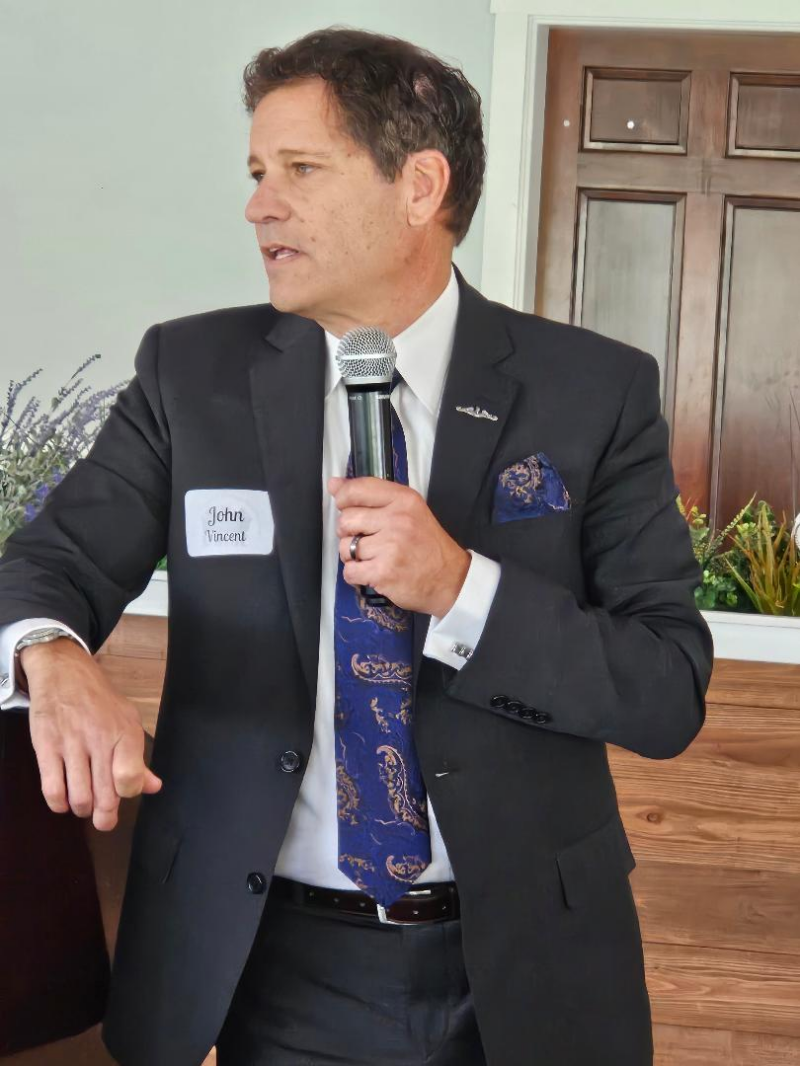
John Vincent, candidate for U.S. House of Representatives, SC-07, spoke to an audience of more than seventy at VOICE’s June 15 monthly luncheon at North Myrtle Beach’s Surf Golf & Beach Club.
Vincent’s people-first platform of common sense over chaos was an encouraging message of sound judgement and practical wisdom. The three pillars of his campaign are to fight government chaos and demand accountability, restore economic power and dignity to working class families, and to keep the promises we made to our veterans.
FOR IMMEDIATE RELEASE CONTACT
Photo attached Carol Stigger
North Myrtle Beach
630-253-3331
He is a proven leader equipped with the experience and character to represent South Carolina’s 7th District with integrity. His twenty years in the Navy included a total of five years in high pressure, high stakes submarine operations. He advanced to a leadership command across seven bases and five military branches. “I will be pressured to toe the party line,” he said. “But nothing can equal the pressure I was under being in a submarine for months at a time.” He promises to vote for his constituents and not cave to the intense political pressures he will encounter in the U.S. Congress. “Every one of my votes will be a vote for my constituents,” he said.
After retiring from the Navy, Vincent was a top leadership development consultant with the prestigious Gallup organization. He then founded a successful small business focused on leadership development and service-based consulting.
His plain-spoken conviction that we, as a state and a nation, can do better received a standing ovation.
George Blumenthal, candidate for South Carolina House of Representatives District 104, and his wife Jean attended the luncheon, both strong supporters of Vincent. Blumenthal offered a warning regarding data farms. “South Carolina has three bills under consideration regarding legislation of data farms,” he said. “Citizens need to understand the pros and cons and then make their opinions known to their representatives.”
VOICE is a local grassroots organization that empowers women of all ages and all walks of life through support, information, and advocacy to strengthen democracy in our communities. To learn more about VOICE or to attend a luncheon or other events please visit their website: www.voicenmb.org.
Dr. Andrews speaks in NMB
Polly Lowman May 20, 2026 North Myrtle Beach Times
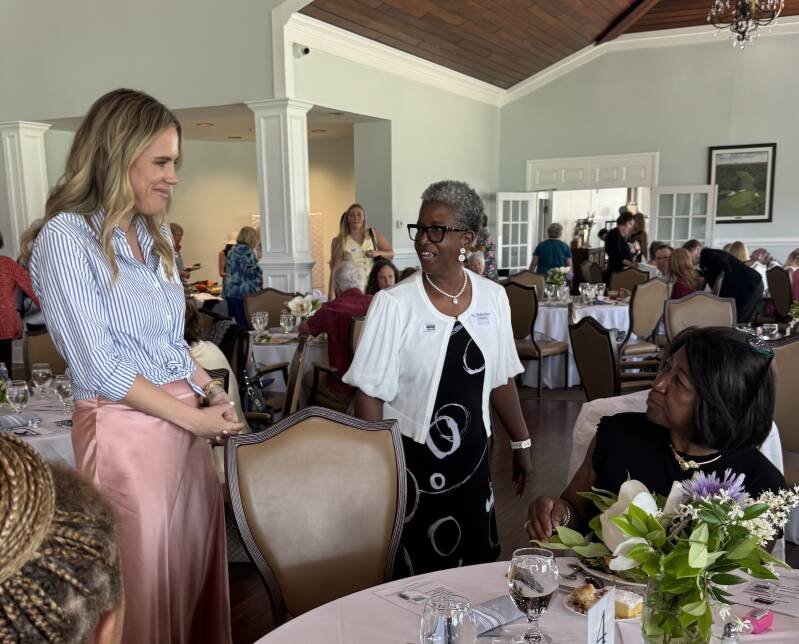
Dr. Annie Andrews, a candidate for the U.S. Senate, left, speaks to VOICE members Annie Andrews, center, and Cheryl Adamson, right.
By Jennifer Ulrich
On Monday, May 18, Dr. Annie Andrews, candidate for the U.S. Senate, inspired some 200 women and men during a luncheon hosted by the VOICE organization. She outlined reasons for running at this time, citing concern for her children’s future and for healthcare issues. As a pediatrician, Dr. Andrews has extensive insight into the health challenges posed by poverty, inequality, and mental health issues. She highlighted her desire to not become a career politician but to help solve problems. “I’m type A, goal oriented, with tenacity and grit, and I will bring all of that with me if given the privilege of serving.”
A key driver for Dr. Andrews is fixing our healthcare system. She believes implementing pragmatic steps will help drive reforms in the current system – noting that 15 counties in South Carolina have no OB/GYN providers. (Note: Per DPH.SC.gov, SC ranks eigth highest for maternal mortality rates in the U.S. Most of which are ruled preventable.) She knows Congress must address cost of living issues and proposes cancelling tariffs that are driving inflation. She will protect Medicare and Social Security for our seniors and those less fortunate financially. She supports a fight against medical disinformation by returning qualified experts to the CDC and NIH. Dr. Andrews highlighted the need to root out corruption in government: starting with partisan gerrymandering; insider stock trading; and corporate influence in elections. As a medical doctor, she is an advocate for women’s health and rights to healthcare. “If you don’t have experience with women’s anatomy, you shouldn’t be writing laws on women’s anatomy.” And finally, she addressed the need for common sense gun laws, such as universal background checks.
Dr. Andrews is fearless regarding her chances to win this election and recent polling shows her down just two points in a contest with Lindsey Graham. She encouraged the largely Caucasian women in the room to get out the vote – and especially to stand shoulder-to-should with and draw strength from, women of color. She reminded the listeners that women are 51 percent of the S.C. population and we need to join together to vote in our common interest.
Dr. Andrews gave knowledgeable responses to a wide array of questions on voter suppression, ICE, Education, political violence, Supreme Court reform and domestic violence. She addressed the rise of Artificial Intelligence noting that developments have gotten ahead of policy, similar to what happened with social media. But she emphasized that scientific development should not stop or be impeded by the lack of policy if we are to remain competitive. The audience rose multiple times to applaud Dr. Andrews for her comments and positions and showed strong support for her candidacy.
VOICE is a growing civic network of nearly 300 women from North Myrtle Beach and surrounding areas, united by a shared commitment to staying informed, engaged and active in our communities. VOICE mission is to empower women, one woman at a time. In addition to monthly speaker luncheons, VOICE hosts monthly social hours. For more information and activities calendar, visit www.voicenmb.org.

Community Conversation Sheds Light on Status of Women and Girls in Horry County
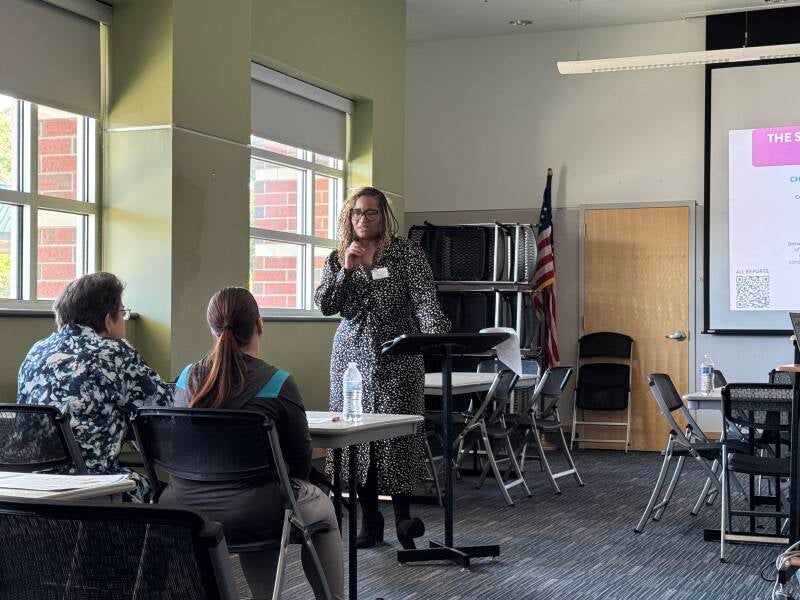
A lively and informative community discussion on the Status of Women and Girls in Horry County was held on April 8th at the North Myrtle Beach Library. The event was hosted by VOICE and Aisha Jones, Senior Partnership & Engagement Associate with the Women's Rights & Empowerment Network (WREN), drawing on 2025 research highlighting key issues facing women and girls across South Carolina.
The conversation covered a range of topics reflecting both strengths and challenges in the county. On maternal health, Horry County carries a Maternal Vulnerability Index of 76%, meaning a significant portion of mothers face risk factors for poor health outcomes. While 72% of infants were born to mothers who received early prenatal care, 9% were born to mothers who received late or no prenatal care at all.
On a positive note, Horry County has strong access to obstetric care, with two or more hospitals or birth centers and at least 60 obstetric providers within an average of nine miles.
Economic and housing challenges were also highlighted.
On a positive note, Horry County has strong access to obstetric care, with two or more hospitals or birth centers and at least 60 obstetric providers within an average of nine miles.
Economic and housing challenges were also highlighted.
Women in Horry County earn 86 cents for every dollar earned by men, and 14% of families experience housing instability. Food insecurity affects 14% of the county's population, with 74% of school-aged children qualifying for free lunch.
Education data showed promise, with 91% of adults holding at least a high school diploma, though childcare affordability remains a serious concern — families spend an average of 30% of their income on childcare, and between 66% and 75% of kindergarteners are not considered school-ready.
The full statewide report, including county-by-county data, is available at www.scwren.org/status-of-women-and-girls-in-sc/.
VOICE is a local grassroots organization that empowers women of all ages and all walks of life through support, information, and advocacy to strengthen democracy in our communities. To learn more about VOICE, please visit their website: www.voicenmb.org.
Press Release for the North Myrtle Beach Times
Written by Stephanie Wilkins
February 2026

January 2026
Visibility Matters!
Through VOICE, I’ve come to understand the power of being seen and supported. Kudos to you all for this achievement and caring. Being part of a community of women who truly sees one another, offer support, and walk through these difficult times together has been incredibly meaningful to me. … we don’t have to face these stressful political times alone. Wearing a VOICE button or acknowledging the Power of the Paper Clip prompted me to ask questions that led to much needed conversations in my blind spots. Activism presents in myriad ways. Some folks are loud and proud in their activism (I love you folks!) and some are just learning to speak up (like me) - even as their voice shakes (I love you folks, too!). Finding our voices can be scary. The first time I talked to a politician I cried. The first time I called a politician's office, I cried (the second and third time too). Showing our values, in something as simple as a button, is one way we start finding our people, building our community, and encouraging others to find their voices. For me, wearing a button is also my way of pushing back against the narrative this administration is desperately messaging regarding the people that oppose them. I mean let's be honest, I oppose and protest the unjust caused by this greedy, corrupt, morally bankrupt regime. Many folks are just now starting to find their voices, starting to tune in to politics, and into what is happening in our country outside of their tiny or insular or seemingly protected areas. Please continue to support them as they step into this world of the unknown. We need continued collaboration in activism, and embrace our differences. Unfortunately, our political/economic standing in the world is crumbling before our very eyes, as our country descends into autocracy with a madman at the helm. WE ALL MUST MAKE OUR VOICES HEARD!
With appreciation for your continued efforts in hope and solidarity,
~ Beverly Bruck
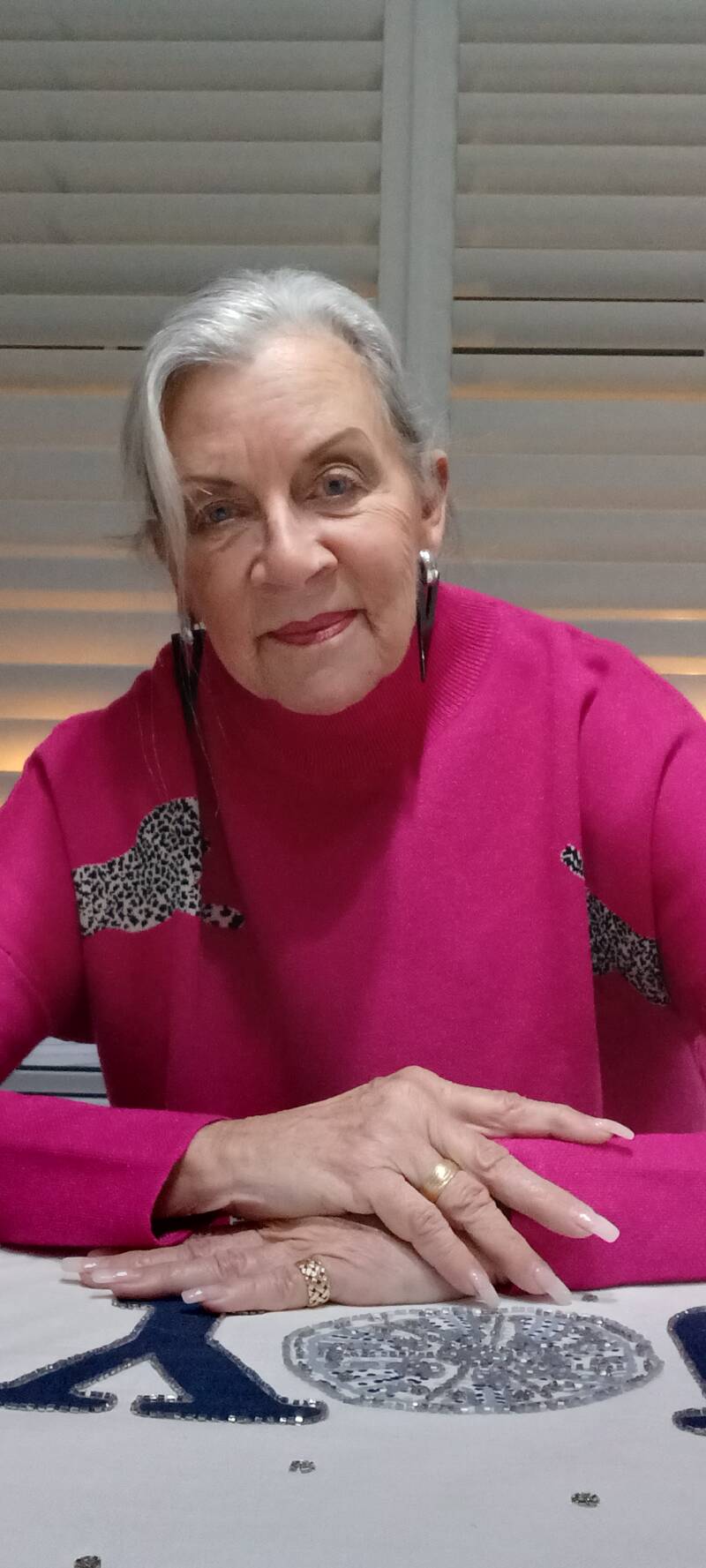
January 19, 2026
Dr. Muriel O’Tuel Is VIP Guest at VOICE Monthly Luncheon
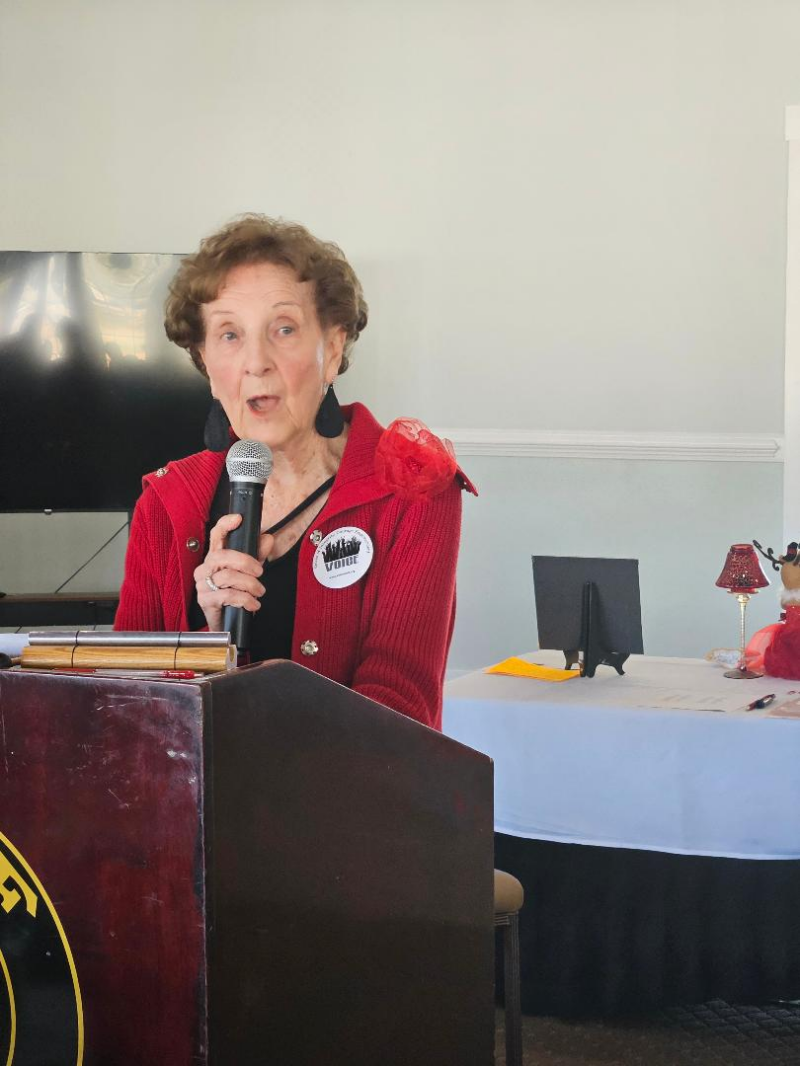
Dr. Muriel O'Tuel
Dr. Muriel O’Tuel, author and motivation speaker, was the guest speaker at the January 19 VOICE monthly luncheon in North Myrtle Beach. Seventy-five women attended, which showed continued growth of the no-dues organization.
As VOICE gears up for its second year of advocacy and information sharing, they learned positive messages offered by Dr. O’Tuel. Hope and inspiration shine from those who leave their homes with what she calls “a full bucket” of positivity. She urges looking ahead while looking your best and reminds people to walk away from toxic people, to not dwell on negative news. “God always balances His books,” she said.
She asked the audience to ponder: who is your mentor? Then, she challenged the group to be mentors to those who are struggling and those who seek guidance.
Her concept of deadly sins is the following: criticizing, blaming, complaining, nagging, threatening, and bragging. Energy expended on these “sins” can be directed to positive actions.
VOICE is a local grassroots organization that empowers women of all ages and all walks of life through support, information, and advocacy to strengthen democracy in our communities. To learn more about VOICE, please visit their website: www.voicenmb.org.
January 11, 2026
Buddhist monks and their dog captivate Americans while walking for peace
Updated 8:55 AM EST, January 11, 2026 Associated Press
A group of Buddhist monks and their rescue dog are striding single file down country roads and highways across the South, captivating Americans nationwide and inspiring droves of locals to greet them along their route.
In their flowing saffron and ocher robes, the men are walking for peace. It’s a meditative tradition more common in South Asian countries, and it’s resonating now in the U.S., seemingly as a welcome respite from the conflict, trauma and politics dividing the nation.
Their journey began Oct. 26, 2025, at a Vietnamese Buddhist temple in Texas, and is scheduled to end in mid-February in Washington, D.C., where they will ask Congress to recognize Buddha’s day of birth and enlightenment as a federal holiday. Beyond promoting peace, their highest priority is connecting with people along the way.
“My hope is, when this walk ends, the people we met will continue practicing mindfulness and find peace,” said the Venerable Bhikkhu Pannakara, the group’s soft-spoken leader who is making the trek barefoot. He teaches about mindfulness, forgiveness and healing at every stop.
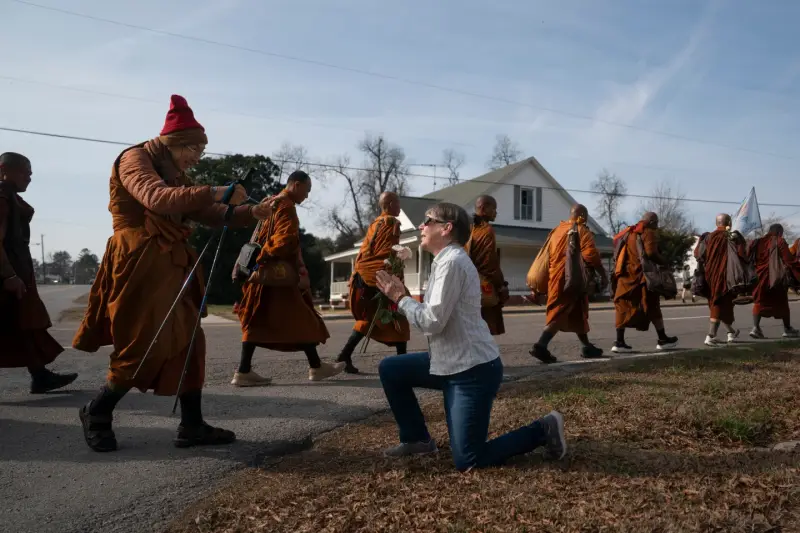
VOICE member, Audrie Pierce traved to Saluda, SC to see the monks. See her comments in the section below.
Preferring to sleep each night in tents pitched outdoors, the monks have been surprised to see their message transcend ideologies, drawing huge crowds into churchyards, city halls and town squares across six states. Documenting their journey on social media, they — and their dog, Aloka — have racked up millions of followers online. On Saturday, thousands thronged in Columbia, South Carolina, where the monks chanted on the steps of the State House and received a proclamation from the city’s mayor, Daniel Rickenmann.
The physical toll of the monks long walk
At their stop Thursday in Saluda, South Carolina, Audrie Pearce joined the crowd lining Main Street. She had driven four hours from her village of Little River, and teared up as Pannakara handed her a flower.
“There’s something traumatic and heart-wrenching happening in our country every day,” said Pearce, who describes herself as spiritual, but not religious. “I looked into their eyes and I saw peace. They’re putting their bodies through such physical torture and yet they radiate peace.”
Hailing from Theravada Buddhist monasteries across the globe, the 19 monks began their 2,300 mile (3,700 kilometer) trek at the Huong Dao Vipassana Bhavana Center in Fort Worth.
Their journey has not been without peril. On Nov. 19, as the monks were walking along U.S. Highway 90 near Dayton, Texas, their escort vehicle was hit by a distracted truck driver, injuring two monks. One of them lost his leg, reducing the group to 18.
You can read more: Buddhist monks walk for peace and captivate Americans | AP News
The following article was published in the North Myrtle Beach Times
Feel the Vibe. John Vincent, Candidate for US Senate SC-7 Rocks Barefoot Landing
“Feel the burn,” is the faintly remembered rallying cry for Bernie Sanders, who proved to be too liberal to woo the majority. Would the country ever again experience such enthusiasm for a candidate?
These are early days, but the vibe for John Vincent at Barefoot Landing on August 30 nailed it. The vibe overflowed to the parking lot. Supporters of Vincent for the US Congress SC-7 packed Mad Gator Grill, including porches and pathways.
Vincent’s common-sense platform calms the chaos in D.C., fights for the working class, fights for veterans, and fights for our right to have a Congress that upholds the Constitution. The Vincent Vibe is surging.
My Kentucky mama taught me that tee-shirts are tacky and lawns are for plants. I bought the tee-shirt. I got the lawn sign. I got the vibe!
And so did twenty members of VOICE (www.voicenmb.org) who attended the event. Flossie Chapman, founding member of VOICE, said, “John Vincent called on us today to be American Freedom Fighters. When we elect John, he will fight for us in Washington using common sense not chaos!”

Published September 4, 2025, in the North Myrtle Beach Times
WREN Leaders Are VIP Guests at VOICE Monthly Luncheon
Women’s Rights & Empowerment Network (WREN) CEO Dr. Amalia Luxardo and WREN’s Partnership and Engagement Associate Aisha Jones addressed more than fifty VOICE members at their monthly luncheon August 18. Nonpartisan and nonprofit, WREN is the only organization in South Carolina advocating for policy changes that improve the lives of women and girls.
Headquartered in Columbia, WREN staff keep a close eye on legislation impacting women and girls. Their 2025 legislative priorities are economic justice and reproductive freedom. These issues are deeply connected and essential to ensure that South Carolina communities have the freedom to shape their own futures.
In addition to educating legislators on the impact of their actions, WREN builds strong relationships with citizens and organizations across the state. This grassroots power is mobilizing informed voters and policy makers.
Luxardo announced, “We do not play it safe; we play for impact.”
Jones said, “An important part of our work is educating policy makers on what matters to their constituents.” By connecting with women around the state, she builds grassroots power while learning firsthand what women and their families need.

Aisha Jones and Dr. Amalia Luxardo
For more information about WREN, please visit their website: scWREN.org.
VOICE is a local grassroots organization that empowers women of all ages and all walks of life through support, information, and advocacy to strengthen democracy in our communities. To learn more about VOICE, please visit their website: www.voicenmb.org.
Published August 28, 2025, in the North Myrtle Beach Times
Candidate John Vincent was a VIP Guest at VOICE monthly luncheon
John Vincent, Candidate, 7th US Congressional District, and his wife Deb were VIP guests at the VOICE monthly luncheon on July 21 held at a North Myrtle Beach restaurant.
Vincent’s message to attendees was to get involved with issues they care about. He applauds group efforts, but he also encourages every citizen to say “I can,” then make a plan. Individual efforts can have as much impact as group projects.
Vincent, a Navy veteran and small business owner, has lived all over South Carolina and has a particular concern for the 7th US Congressional District. He said, “This District is beautiful, but it is hurting. With a median income 33 percent below the national average, more than 100,000 residents on Medicaid, and over one in four children living in poverty, we deserve leadership that sees us, hears us, and fights for us.”
VOICE is a local grassroots organization that empowers women of all ages and all walks of life through support, information, and advocacy to strengthen democracy in our communities. To learn more about VOICE, please visit their website: www.voicenmb.org.

Published in the North Myrtle Beach Times
Kentucky Governor Beshear and Candidate John Vincent Inspire VOICE Members
Two North Myrtle Beach VOICE representatives had the pleasure of meeting Kentucky Governor Andy Beshear and John Vincent, Candidate, 7th US Congressional District at the July 17 reception and dinner sponsored by the Georgetown County Democratic Party.
Beshear and Vincent spoke eloquently and passionately about the importance of every citizen standing up and speaking out for issues that impact their lives and beliefs. The speakers focused on the democratic process and the right of every citizen to be heard, and their needs respected.

John Vincent, candidate for US Congressional 7th District

Kentucky Governor Andy Beshear
Published in the North Myrtle Beach Times
VIEWS
John Lewis's letter read and printed on the day of his funeral.
Though I may not be here with you, I urge you to answer the highest calling of your heart and stand up for what you truly believe. In my life I have done all I can to demonstrate that the way of peace, the way of love and nonviolence is the more excellent way. Now it is your turn to let freedom ring. When historians pick up their pens to write the story of the 21st century, let them say that it was your generation who laid down the heavy burdens of hate at last and that peace finally triumphed over violence, aggression and war. So I say to you, walk with the wind, brothers and sisters, and let the spirit of peace and the power of everlasting love be your guide."

The Dangerous Erosion of Women's Healthcare Rights
At 79 years old, I have lived through many changes in women’s healthcare. I have experienced both the joys and heartbreaks of pregnancy firsthand. Out of my five pregnancies, two resulted in live births, one ended in miscarriage, and two required medically necessary abortions. One was an ectopic pregnancy that ruptured, a life-threatening emergency that could have killed me. The other was a fetus that had died at 15 weeks and needed to be removed. In today’s political climate, I worry that I might not have received the lifesaving care I needed.
There is a growing and dangerous movement to strip abortion from healthcare, treating it as something separate from medical necessity. But the reality is that abortion is healthcare. It always has been. Women’s lives depend on it. The idea that politicians—many of whom have no medical training—are now making decisions that should be left to doctors and their patients is both infuriating and terrifying.
Worse still, there is a push to criminalize not just abortion but even discussing it. In South Carolina, where I live, Senate Bill 323 seeks to punish anyone who even talks to a pregnant woman about abortion. This is not just an attack on reproductive rights; it is an attack on free speech and basic medical privacy. It is absurd to think that a woman could be charged with a felony for seeking information about her own healthcare options. Additionally, South Carolina is among several states moving to classify abortion as a homicide, applying the same legal standards, defenses, and penalties as those used in cases involving the death of a person who has been born.
The personal has now become political in the most dangerous way. Women are being treated as second-class citizens, their bodily autonomy stripped away by laws that disregard the complexities of pregnancy. Miscarriages, ectopic pregnancies,

complexities of pregnancy. Miscarriages, ectopic pregnancies, and fetal abnormalities happen. Complications arise. And yet, lawmakers are crafting policies that ignore medical reality, placing women’s lives at risk.
I am distressed by many things in today’s world, but this erosion of privacy and healthcare rights is among the most alarming. I never imagined that in my later years, I would be fighting battles I thought had already been won. We must speak up. We must push back. Because if we don’t, the next generation of women—our daughters and granddaughters—will face a world where their health, their choices, and even their conversations are controlled by the state. And that is simply unacceptable.
Ellen Holliman
North Myrtle Beach, SC
CONGRESSIONAL TESTIMONY
I have three granddaughters. Their solution to today's grim pregnancy realties is this. They will seek employment in Europe and have their children there. Then, they will have their tubes tied7 Then, and only then, will they return to the United States. They are professional women: taxpayers, good citizens. If problems arise that require a procedure before they can move to Europe, I have assured them that they will always have a choice. If that means care in another country, so be it.
Fortunately, we have resources.
What about families who are barely meeting their basic needs?
Poor women's choices are so limited that many will be forced to give birth. Their maternity expenses, their children's expenses like food, housing and medical care are on us taxpayers. Cost to raise one child without special needs to age 18 is $200,000 to $310,000.
Impoverished mothers cannot afford it. You and your employed constituents will be paying for the majority of forced births until they are
18. College is not affordable, so they join the ranks of the poor. Many will be poorly parented, many abused. These broken adults are our next generation of poor people who will require government assistance. Out of desperation, some will turn to crime. You may be a victim; if not physically then financially. The pattern repeats throughout the generations.
I mention the financial hit that will burden you and your constituents because humane solutions do not move you. You stand up for the fetus then kick the child to the curb. You work like hell to reduce aid to poor families. After all, why should you pay for their mistakes?
Mistakes you legislate.

Women who have no choice have my utmost compassion. Anyone who votes for this inhumane bill has my sympathy. You are either ignorant of the realities of pregnancy and people who are poor or you cravenly hunt votes frJm people as smug in their righteousness as you are. As Shakespeare said, "the evil that men do lives after them."
Is this the legacy you have worked for all your life?
Carol Stigger